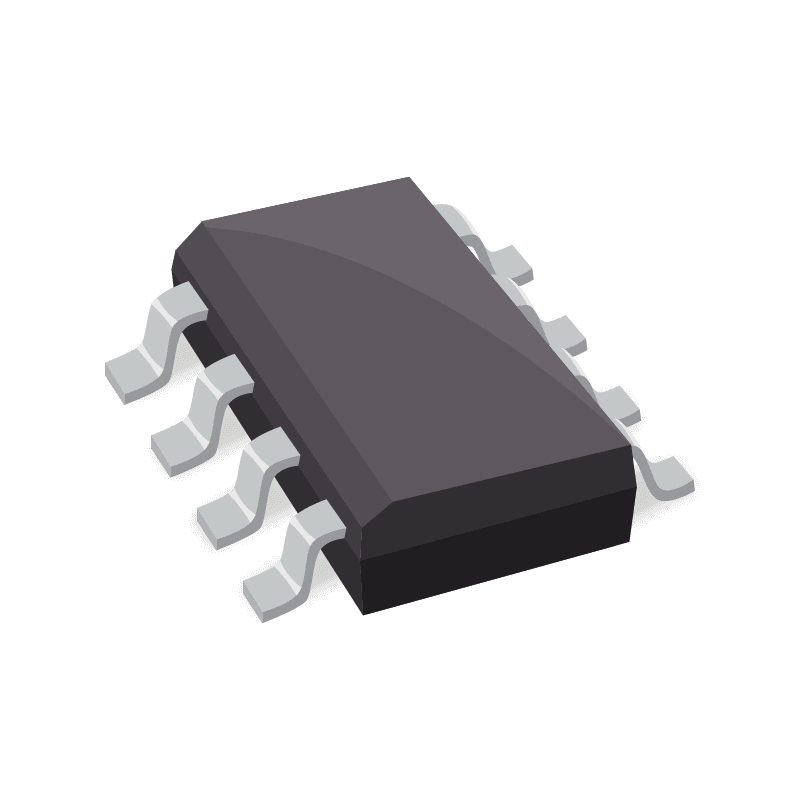
P82B96DR
2-bit bidirectional 2- to 15-V 400-kHz I2C/SMBus buffer/cable extender 8-SOIC -40 to 85
Fusion-Tested. Quality Guaranteed.
Combining advanced technology and proprietary data with expert engineering and quality teams to maintain consistent testing standards across all facilities.
Full Specifications
- Number of Channels
- 2
- Lifecycle Status
- Production
- Mount
- Surface Mount
- Case/Package
- SOIC
- Number of Pins
- 8
- Packaging
- Tape & Reel
- Max Supply Voltage
- 15V
- Min Supply Voltage
- 2V
- Min Operating Temperature
- -40°C
- Max Operating Temperature
- 85°C
- Operating Supply Current
- 4mA
- RoHS
- Compliant
- Height
- 1.75mm
- Lead Free
- Lead Free
- Length
- 4.9mm
- Manufacturer Lifecycle Status
- Production
- Nominal Supply Current
- 900µA
- Radiation Hardening
- No
- Schedule B
- 8542390000
- Width
- 3.91mm
Key Features
- 2-Bit Bidirectional I2C/SMBus Buffer
- Cable Extender Function
- Wide 2V To 15V Supply Range
- 5ns Propagation Delay
- -40°C To 85°C Operating Temperature
- 8-Pin SOIC Package
About this Product
The Texas Instruments P82B96DR is a 2-bit bidirectional I2C/SMBus buffer and cable extender. It operates from a 2V to 15V supply with a 5ns propagation delay and a nominal 900µA supply current. The device comes in an 8-pin SOIC surface mount package, supplied on tape and reel, and operates across -40°C to 85°C.
Common Uses
What is the Texas Instruments P82B96DR I2C/SMBus Buffer Used For?
The P82B96DR is used to extend I2C and SMBus signals over long cables and across backplanes, and to interface buses running at different voltage levels. Typical uses include server and telecom management buses, industrial control networks, and remote sensor connections. System designers use it where standard I2C capacitance and distance limits would otherwise be exceeded.
Certifications & Memberships
Fusion’s in-house quality hubs and Prosemi testing facility are fully certified to meet critical industry standards for electronic component inspection and testing.
Fusion-Tested. Quality Guaranteed.
Combining advanced technology and proprietary data with expert engineering and quality teams to maintain consistent testing standards across all facilities.