TLV3201AIDBVR
- Description
- 5.5-V, high-speed, single push-pull comparator 5-SOT-23 -40 to 125
- Common Mode Rejection Ratio
- 70dB
- Hysteresis
- 1.2mV
- Input Offset Voltage (Vos)
- 1V
- Power Supply Rejection Ratio (PSRR)
- 85dB
- Propagation Delay
- 50ns
- Response Time
- 40ns
- Datasheet
Quantity
6,000 AvailableLet us do the sourcing. Even if it's not available now, our team can track it down and tailor a solution just for you.
- Single high-speed push-pull comparator
- 40 ns response time, 50 ns propagation delay
- 1.2 mV hysteresis, 5 nA input bias current
- 70 dB CMRR and 85 dB PSRR
- Low 40 uA quiescent supply current, 21 mA output current
- 5-pin SOT-23 package, 2.7 V to 5.5 V supply, -40 to 125 degrees C
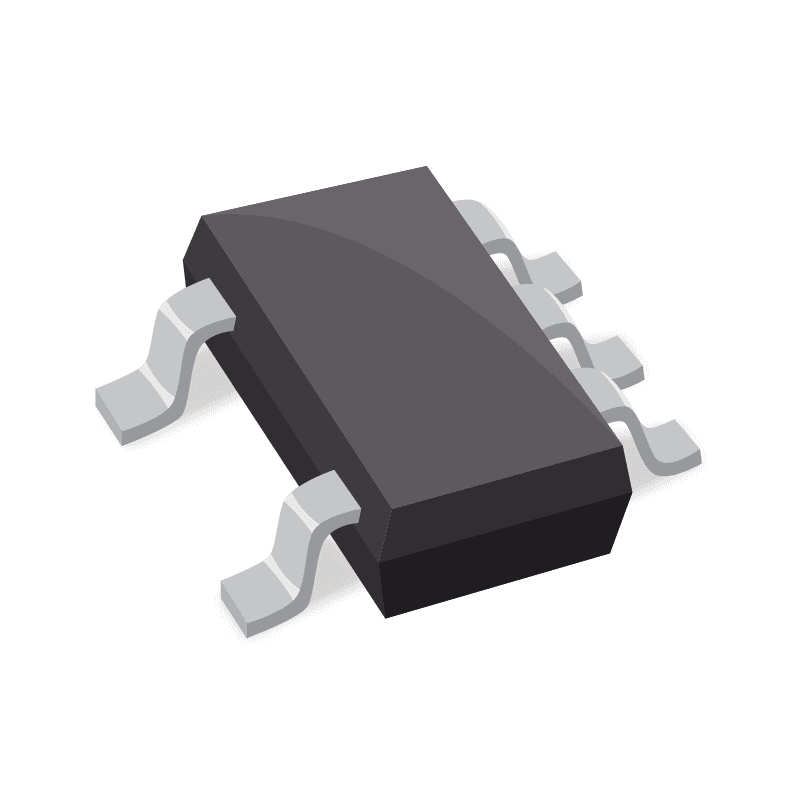
The Texas Instruments TLV3201AIDBVR is a single high-speed push-pull comparator supplied in a 5-pin SOT-23 package on tape and reel. It features a fast 40 ns response time and 50 ns propagation delay, 1.2 mV hysteresis, 5 nA input bias current, a 70 dB common-mode rejection ratio, and 85 dB PSRR. The device operates from supplies between 2.7 V and 5.5 V over a -40 to 125 degrees C range.
The TLV3201AIDBVR is used for fast threshold detection and level comparison where low propagation delay and a push-pull output are required. Its speed and low quiescent current suit zero-crossing detection, pulse and edge detection, and signal squaring in industrial and portable systems. It is commonly chosen by engineers designing responsive, low-power decision circuits.
Fusion’s in-house quality hubs and Prosemi testing facility are fully certified to meet critical industry standards for electronic component inspection and testing.
Quantity
6,000 AvailableLet us do the sourcing. Even if it's not available now, our team can track it down and tailor a solution just for you.