TPS2553QDBVRQ1
- Description
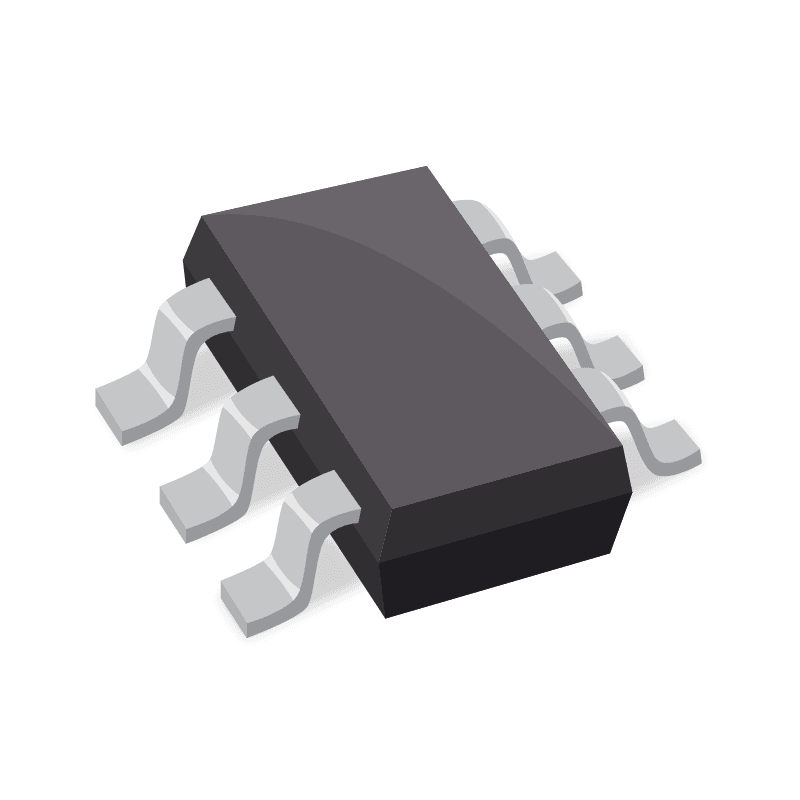
- USB Power SW Hi Side/DIST Single 2.5V to 6.5V 0.075A to 1.3A 6-Pin SOT-23 T/R
- Fault Protection
- Over Temperature
- On-State Resistance
- 85mO
- Max Output Current
- 1.5A
- Turn-Off Delay Time
- 3ms
- Turn-On Delay Time
- 3ms
- Datasheet
Quantity
Let us do the sourcing. Even if it's not available now, our team can track it down and tailor a solution just for you.
- Wide Input Voltage Range: 2.5V to 6.5V
- High Side Output Configuration
- Low On-State Resistance: 85mΩ
- Fast Turn-On and Turn-Off Delay Time: 3ms
- Over Temperature Fault Protection
The Texas Instruments TPS2553QDBVRQ1 is a highly efficient USB power switch designed for high side applications, providing reliable power management in compact electronic devices. With a wide input voltage range from 2.5V to 6.5V and a maximum output current of 1.5A, this device ensures optimal performance in various applications. Housed in a space-saving 6-Pin SOT-23 package, it features robust fault protection and low on-state resistance, making it an ideal choice for modern power distribution needs.
The USB Power SW Hi Side/DIST is used for managing power in various electronic devices, particularly for hot swap applications. Key capabilities include over temperature fault protection and a controlled on/off interface, making it suitable for consumers and industrial applications. Engineers and designers commonly use it in power management and battery management systems.
Fusion’s in-house quality hubs and Prosemi testing facility are fully certified to meet critical industry standards for electronic component inspection and testing.
Quantity
Let us do the sourcing. Even if it's not available now, our team can track it down and tailor a solution just for you.