Fusion-Tested. Quality Guaranteed.
Combining advanced technology and proprietary data with expert engineering and quality teams to maintain consistent testing standards across all facilities.
Full Specifications
- Collector Emitter Voltage (VCEO)
- 300mV
- Transition Frequency
- 300MHz
- Lifecycle Status
- Production
- Mount
- Surface Mount
- Polarity
- NPN
- Max Collector Current
- 1.5A
- Collector Emitter Breakdown Voltage
- 80V
- RoHS
- Compliant
- Max Breakdown Voltage
- 80V
- Max Power Dissipation
- 500mW
- Number of Terminals
- 3
- Schedule B
- 8541290080
Key Features
- Max Collector Current: 1.5A
- Collector Emitter Breakdown Voltage: 80V
- Max Power Dissipation: 500mW
- Transition Frequency: 300MHz
- Lead-Free & RoHS Compliant
About this Product
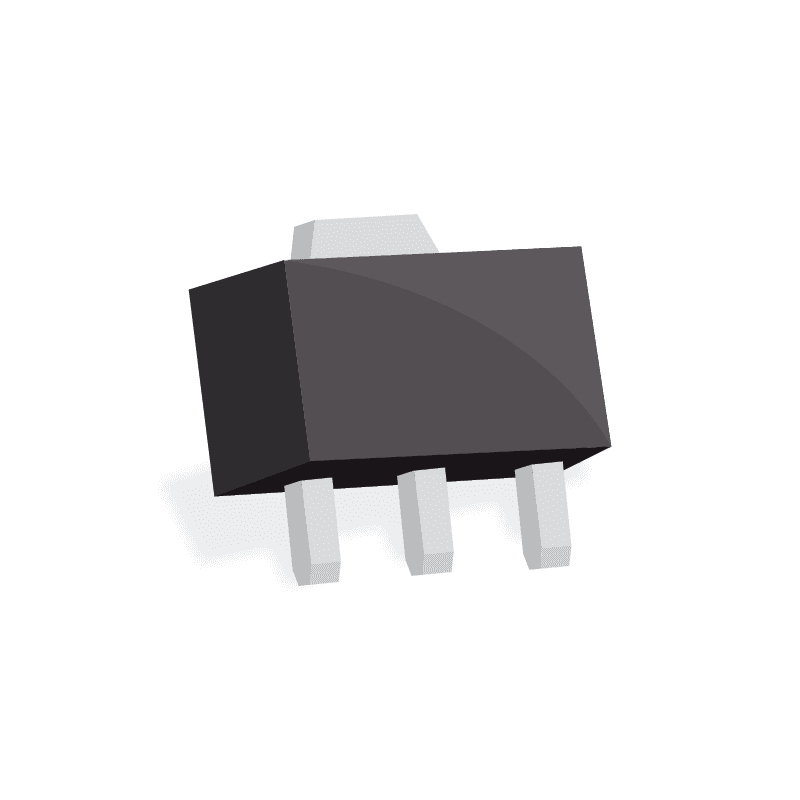
The ROHM Small Signal Bipolar Transistor is designed for high-efficiency applications requiring reliable performance and compact size. With a maximum collector current of 1.5A and a collector emitter breakdown voltage of 80V, this NPN silicon transistor is ideal for various electronic circuits. Its surface mount design allows for easy integration into modern PCB layouts, making it a versatile choice for engineers and designers.
Common Uses
What is the Small Signal Bipolar Transistor Used For?
This Small Signal Bipolar Transistor is commonly used in low-power amplification and switching applications. With a maximum collector current of 1.5A and a breakdown voltage of 80V, it is suitable for various electronic circuits where NPN configuration is required. It is widely utilized by engineers and hobbyists in designing compact, efficient circuitry in consumer electronics and communications devices.
Certifications & Memberships
Fusion’s in-house quality hubs and Prosemi testing facility are fully certified to meet critical industry standards for electronic component inspection and testing.
Fusion-Tested. Quality Guaranteed.
Combining advanced technology and proprietary data with expert engineering and quality teams to maintain consistent testing standards across all facilities.